AI System BuilderFeatured
FreelanceOS
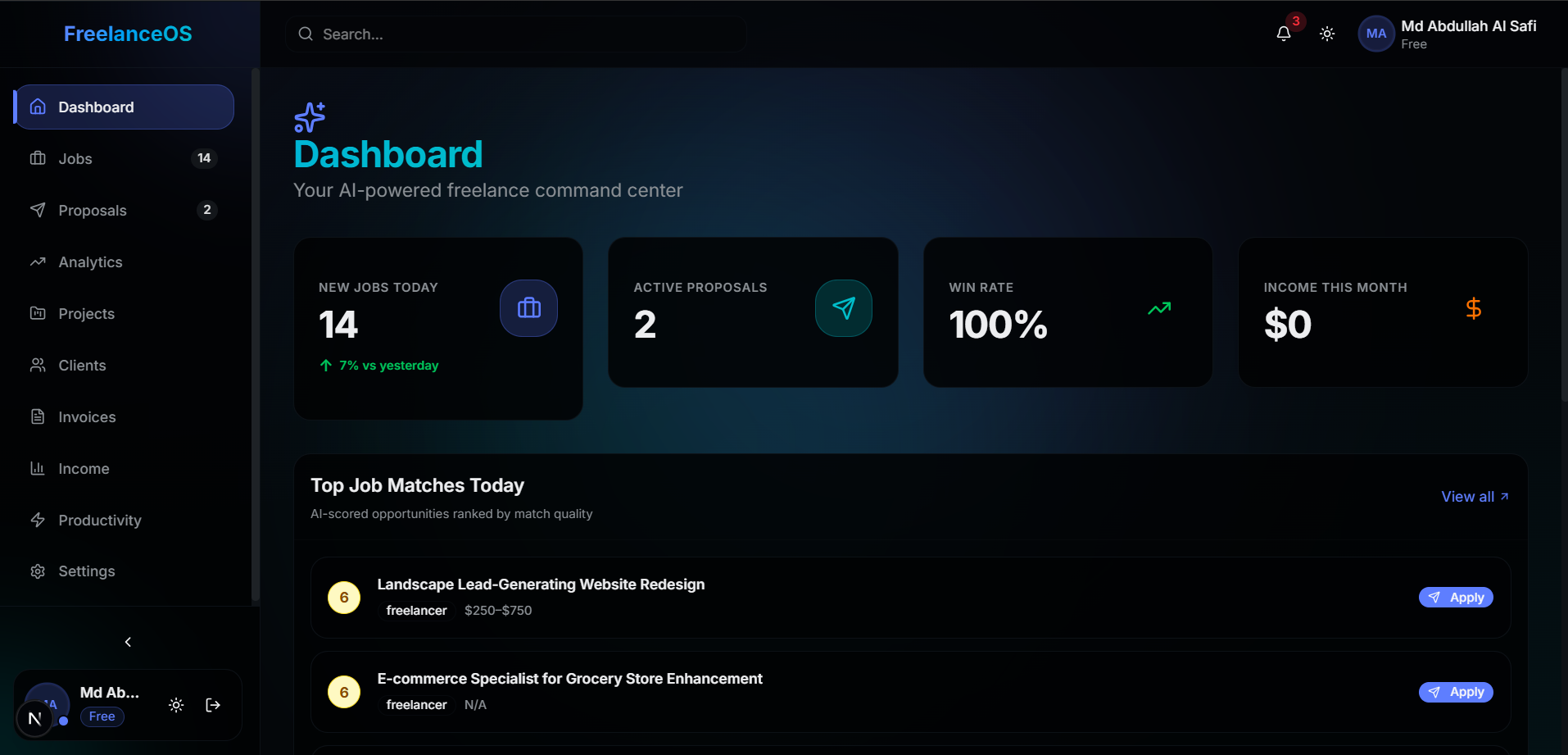
FreelanceOS is an AI-powered freelance operating system that aggregates jobs from multiple platforms, scores them with AI, generates personalized proposals in seconds, and provides CRM, invoicing, time tracking, and analytics—all in one Next.js + Supabase app with a modern, responsive UI.
FreelanceOS is a full-stack SaaS platform that helps freelancers find jobs, win proposals, and run their business in one place. It aggregates opportunities from Upwork, Freelancer, WeWorkRemotely, LinkedIn, and other sources; uses AI (Claude/GPT) to score jobs 1–10 and match them to the user’s profile; and generates A/B-tested proposals in under a minute. The product also includes a CRM, project management with Kanban and time tracking, invoicing, income analytics, and optional Telegram alerts for high-scoring jobs. Built with Next.js 16 (App Router), TypeScript, Supabase (PostgreSQL, Auth, Storage), Tailwind CSS, shadcn/ui, and Framer Motion, with a modern landing page and dashboard designed for clarity and responsiveness.
Problem
Freelancers waste hours every week hunting for jobs across Upwork, Freelancer, LinkedIn, and niche boards, then spend more time writing proposals that often get ignored. There’s no single place to see which opportunities actually fit their skills, track which proposals win, or manage clients, projects, and invoices without juggling spreadsheets and multiple tools. The result: low reply rates, missed deadlines, and a fragmented view of their business. Pain points: Too much time on manual job search and proposal writing No way to prioritize jobs that match their profile Client, project, and income data scattered across tools Hard to see what’s working (win rates, platforms, income trends)
Solution
FreelanceOS is an AI-powered operating system that brings job discovery, proposal creation, and business management into one product. Job discovery & matching The app aggregates jobs from multiple platforms (Upwork, Freelancer, WeWorkRemotely, RemoteOK, LinkedIn, and others) and scores each job 1–10 based on the freelancer’s profile, skills, and preferences. Users can filter by score, platform, budget, and skills, and get alerts (including via Telegram) when high-scoring jobs (e.g. 7+) appear—so they focus on the best fits instead of endless scrolling. AI proposal generation Integrated AI (Claude and GPT) generates personalized, human-sounding proposals in under a minute. Users get two variants for A/B testing and can track status (sent, viewed, replied, won/lost), so they learn what works and spend less time drafting. Unified business management A single dashboard ties together CRM (clients, projects, revenue per client), project management (Kanban, tasks, milestones, time tracking, file uploads), invoicing (create, send, track paid/overdue), and income analytics (trends, charts, reports). Optional Telegram integration keeps high-value job alerts in one place. Technical approach Built with Next.js 16 (App Router), TypeScript, and Supabase (PostgreSQL, Auth, Storage) for a fast, type-safe full-stack app. The UI uses Tailwind CSS, shadcn/ui, and Framer Motion for a modern, responsive experience with glassmorphism, dark mode, and clear hierarchy. Job ingestion uses RSS feeds plus a Puppeteer-based scraper for platforms like LinkedIn, with cron-triggered aggregation and duplicate handling so the job feed stays fresh and clean.
Result
Focused job feed — Users see only jobs that match their profile (scored 7+), reducing noise and time spent browsing. Faster proposals — AI-generated proposals in under a minute instead of 15–30 minutes per application, with A/B variants to improve win rates over time. Single source of truth — One app for jobs, proposals, clients, projects, time, invoices, and income, replacing spreadsheets and multiple tabs. Data-driven decisions — Win rates, platform performance, and income trends visible in one dashboard so freelancers can double down on what works. Modern, scalable product — A production-ready SaaS with auth, subscription (Stripe), multi-platform ingestion, and a polished, responsive UI suitable for real users and further iteration.
Tech Stack
Next.js 16TypeScriptSupabaseTailwindshadcn/uiStripePuppeteer